No. 8 – July 2025
An occasional newsletter from the Hawthorn Ridge Crater Association (HRCA)
Introduction
In this edition I report on the 1 July 2025 commemorations at Beaumont Hamel, and I also continue the story of 252 Tunnelling Company by looking at what happened in March 1916.
1 July 2025
This year saw 1 July dawn very bright and warm, indeed later in the day it was a sweltering 34 ̊ C and, in my case, saw a retreat to the shade and a ready supply of cold drinks! From 7 a.m. onwards people started assembling at the Sunken Lane for the ceremony led by Andy Robertshaw where a tot of rum was offered to all. Also, envelopes were handed out for opening at 7:30 a.m., each containing the brief story of one of those who fought at Beaumont Hamel on 1 July 1916 and their fate that day. Once again we were delighted to see
David and Richard Spencer at the ceremony; David’s father, Second Lieutenant George Spencer, 1st Battalion, Lancashire Fusiliers, advanced from the Sunken Lane that day, and I told the story of his incredible service during the war in Newsletter No. 6 .
Following the completion of the ceremony at the Sunken Lane the vast majority walked up to the Hawthorn Crater behind the piper, Sylvain, who deserves the highest praise for completing the march up the steep hill in a khaki uniform and ever increasing temperatures. It was good to see the crater in such good order and thanks go to Francis Lavaquerie for strimming it all in the days before the ceremony – another notable feat of endurance in the hot weather!
At the crater Terry Berry, HRCA Chairman, and Madame Lavaquerie, Mayor of Beaumont Hamel, thanked everyone for attending and spoke of the significance of the day. After the exhortation was given by Rick Smith, the Last Post was played before observing a minute’s silence. The silence was broken by Sylvain playing Flowers of the Forest while wreaths, flowers and other tributes were laid. Thereafter everyone was invited to the village hall for refreshments.
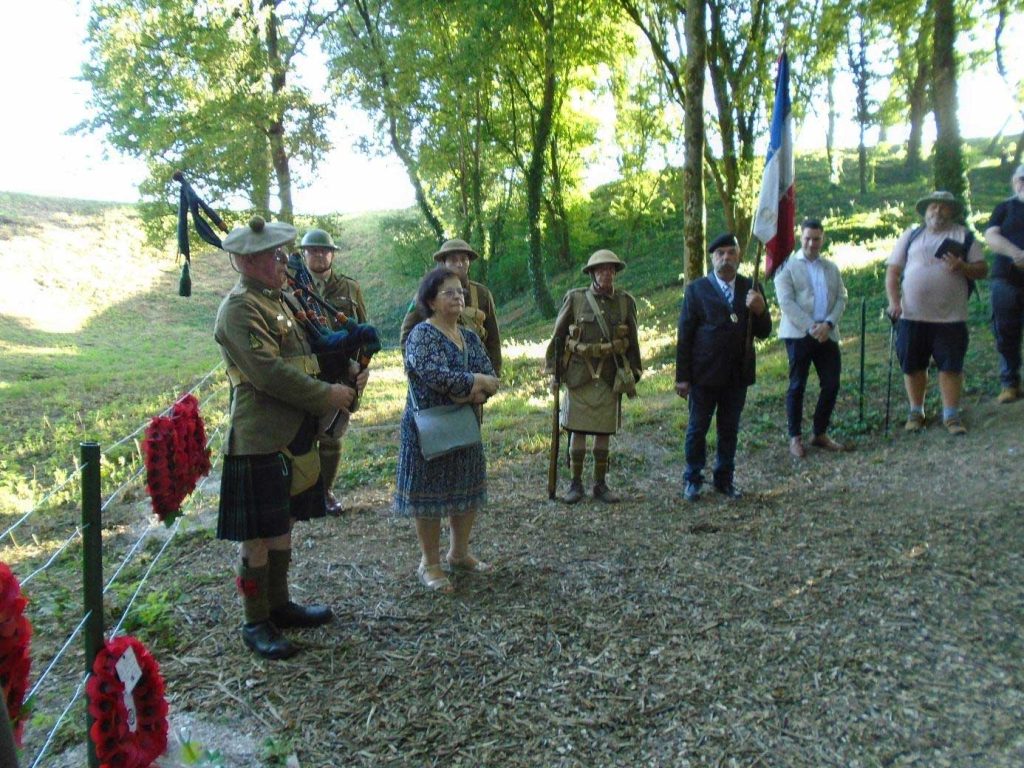
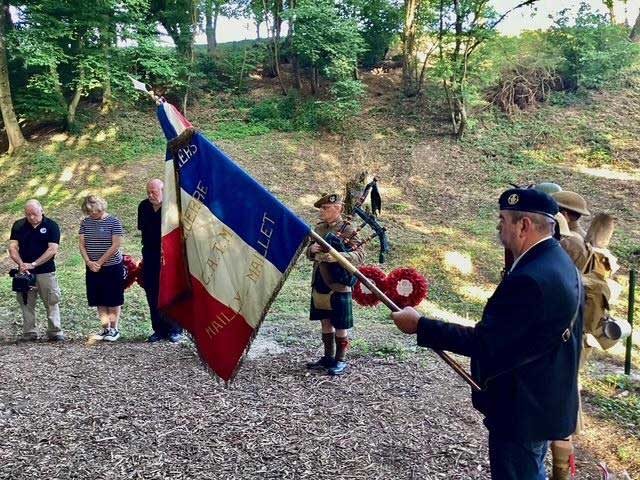
Pictures by Derek Bird and Peter Wilkins.
The 252nd Tunnelling Company – March 1916.
March 1916 got off to a very bad start when on the first day of the month ‘the enemy blew a large camouflet at 11:57 a.m. directly east of RIII (2) (3) and by it destroyed 62 feet [19 metres] of our gallery. Sgt Dean and two sappers were working in the face at the time and were killed. It was impossible to get near the bodies. The strength of the German charge was probably about 3,000 lbs H.E.’ [pounds of High Explosive = 1,364 kg]. For the bravery shown during this incident both Sergeant Brown and Sapper Burns were awarded the Distinguished Conduct Medal. The citation for Sergeant Edward Brown stated that his award was: ‘For conspicuous devotion to duty in rescuing men who had been incapacitated after the blowing in of a camouflet. Later he re-entered the mine to rescue incapacitated tunnellers and worked strenuously till exhausted to extricate men who were entombed in a destroyed gallery’. Sapper John Burns’ citation reads: ‘For
conspicuous devotion to duty and disregard for danger. Following the explosion of an enemy mine, he rescued an injured comrade, and later carried out two others. Sapper Burns then returned to aid the rescue work under very dangerous conditions’.
The three dead tunnellers were subsequently buried together in Auchonvillers Military Cemetery. For some reason, despite the date of the incident being clearly recorded in the War Diary as being on 1 March, the three victims are shown on other records as dying on the 2nd, perhaps this was due to their fate not being confirmed until the time when their bodies were found and recovered.
Despite the loses, the tunnellers continued their work, although progress was slowed by No.2 Section, consisting of two officers and 61 other ranks, being detached on 6 March for duty with 174 Tunnelling Company at Bray for a month. Then, the following day, all work had to be stopped when the 107th Infantry Brigade, 36 th (Ulster) Division, who were manning the sector, were unable to supply any men to act as labourers.
Thereafter work soon picked up pace and on 12 March it was recorded that No.4 Section broke a record by driving a gallery 69 feet (21 metres) through chalk in 65 hours. Three days later mention is made of the choosing of the sites and the start of the new workings, HI and HII, on the Hawthorn Ridge. On 17 March they got revenge for the earlier losses when a 3,000 pound (1,364 kg) charge was fired at 6:30 a.m. at the end of RIII (2) (2) as ‘previous to the blow the enemy were heard with naked ear very close and above our gallery
but having past the point of charge and advanced towards our parapet. There is no doubt that the enemy were destroyed and his gallery blown in, a long depression being visible on the surface where his gallery collapsed’. Five days later the Germans retaliated by firing a large mine that cratered the ground just in front of the parapet of the British front line, but luckily no casualties were caused.
On the last day of March 1916 the British tunnellers exploded two more mines, one of 2,000 pounds (907 kg) of Ammonal at RII (1) (3) at 5 p.m. which ‘caught the enemy and destroyed their gallery’, followed 30 minutes later by similar charge at RIII (2) (4) which ‘destroyed the enemy gallery’.
On 7 March, due to German artillery fire, the company’s advanced billets, that had been in the cellars of houses in Auchonvillers, were moved to a tented site on the lawns of the chateaux at Beaussart. Unfortunately, on the 29th, a German aeroplane dropped two bombs on the camp at Beaussart and seriously injured four tunnellers, one of whom was to later die of his injuries – his story will be told in the next edition. A second attack was made the following day, but thankfully the five bombs dropped caused no damage.
Acting Sergeant Alfred Dean
Unfortunately little has been discovered about 139255, Acting Sergeant, Albert Dean, but he appears to have arrived in France on 3 May 1915 as a member of the 4th Royal Fusiliers, and later transferred to the Royal Engineers. He was born at Audley, Staffordshire, to Daniel and Mary Dean in 1890. In 1911 he was living with his parents and three siblings at 220 Congleton Road, Talke, near Stoke-on-Trent, and was working underground as a coal loader. He is buried with the other two men who were killed in the explosion of 1 March 1916, and another who died a few months later, in Auchonvillers Military Cemetery, Grave Ref: II.A.14. His headstone has an unusual epitaph: ‘And though worms destroy my body yet in my flesh I shall see God’. He left his effects to his youngest sister, Annie Burton, who also received his War Gratuity.
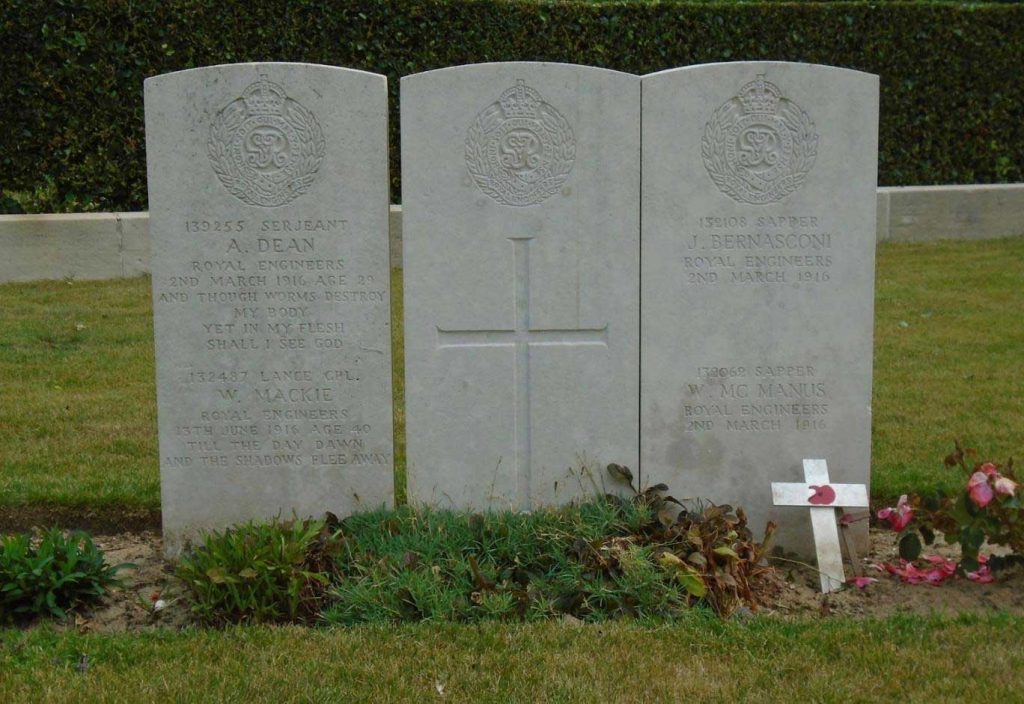
Sapper William McManus
132062, Sapper, William McManus, was born in Batley, Yorkshire on 18 May 1884, but his mother, Mary Townsend, was unmarried and therefore his birth was recorded as William Townsend. However, Mary married Thomas McManus two years later and William thereafter used the McManus surname.
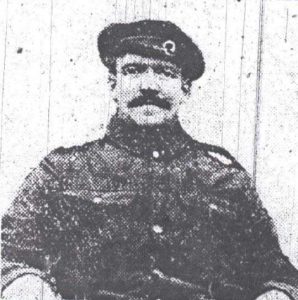
In July 1902 he added two years to his age and enlisted into the King’s Royal Rifle Corps, but only served for 179 days before being given a free discharge. Returning to Batley he resumed mining, and in March 1905 William married Maggie Redgwick, a 21 year-old rag sorter – using his proper surname of Townsend on the marriage certificate. Unfortunately, William appears to have spent a short time in Wakefield Prison as a debtor in 1907, and by the 1911 Census he and Maggie were living, childless, at 38 Peel Street, Batley. In July 1911, however, Maggie reverted to her maiden name and left Britain for the USA to live with her aunt. The failure of the marriage may have been the catalyst for William to move to Darfield, near Barnsley, Yorkshire, where he was employed at the Mitchell Main Colliery for more than two years before enlisting into the Royal Engineers as a tunneller’s mate on 22 September 1915, using the McManus surname.
After being equipped and given a minimum of military training at the Royal Engineer’s Depot at Chatham, Kent, he arrived in France on 9 October and joined the 252 Tunnelling Company on the 21st. On 6 November he was remustered to tunneller. On 2 January 1916 he was admitted to hospital for an unspecified illness, and in mid-February he was found guilty of overstaying leave by 24 hours, for which the company commander, Major Trower, sentenced him to 14 day’s Field Punishment No.2 and fined him one day’s pay. His punishment was only completed the day before his death, thanks to 1916 being leap year.
His father, Thomas McManus, had been in receipt of a separation allowance while William was serving, and he was also awarded a five shillings a week pension payable from 3 October 1916, but unfortunately this was short-lived as Thomas died just 25 days later. Although he is generally commemorated under his assumed surname, McManus, he is named as William Townsend on the memorial at St. Mary of the Angels Catholic Church, Batley.
Thanks go to the ‘Past to Present Genealogy’ website and the Batley History Group for information.
Sapper James Bernasconi
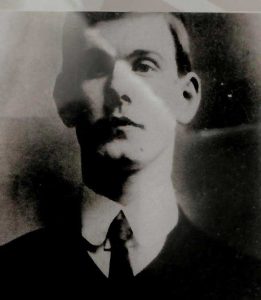
The third man to die in the 1 March 1916 explosion was 132108, Sapper, James Bernasconi. James was born to James and Martha Bernasconi in 1884 at Leeds, Yorkshire. He married Ethel Haley in December 1910, and a son, Frederick, was born in January 1912. A second son, James, was born in September 1913, but unfortunately he died in July 1915.
James Bernasconi worked as a coal miner and enlisted at Leeds as a tunnellers mate on 23 September 1915 and, after the briefest training, embarked for France on 9 October to join 252 Tunnelling Company. Following his death in the explosion of 1 March 1916, enquiries were made on behalf of his widow regarding his personal effects namely ‘… a watch which she would like for her little boy if it had been found and his Rosary Beads’, however, it appears that these items were not forthcoming. His widow was subsequently awarded a pension of 15 shillings a week.
13 November 2025 Ceremonies
As usual there will be two ceremonies held at Beaumont Hamel on the morning of 13 November, the anniversary of the second mine explosion at the Hawthorn Redoubt and the subsequent capture of the village by the men of the 51st (Highland) Division. The first ceremony, that I organise on behalf of the Scotland (North) Branch of the Western Front Association, will be held at 10:30 a.m. at the 51st (Highland) Division flagstaff in the centre of the village. At its conclusion everyone is invited to walk up to the Hawthorn Crater for the HRCA ceremony, before returning to the village for refreshments.
Newsletter Editor
derek.bird876@gmail.com
HRCA contact details: –
Website: www.hawthornridgeca.com
Email: enquiries@hawthornridgeca.com
Mobile: 07747 862014
Twitter: @HawthornRidgeCA
Facebook: Hawthorn Ridge Crater Association