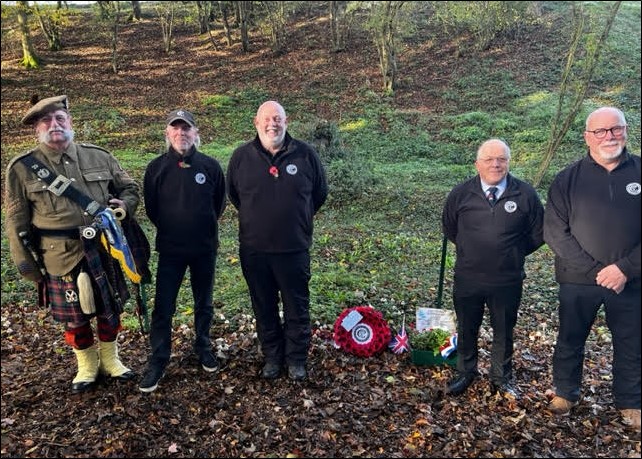
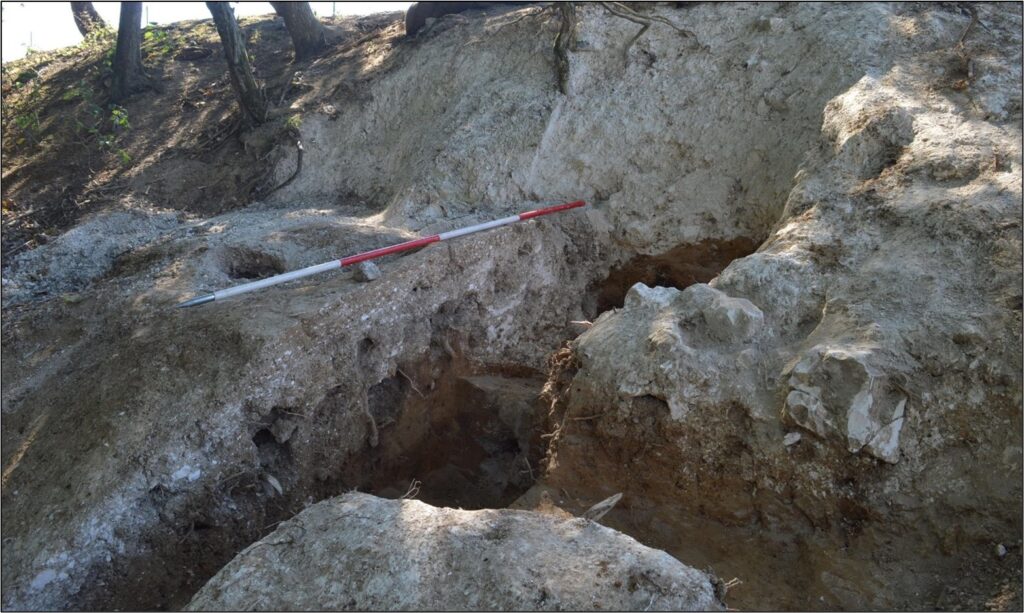
An occasional newsletter from the Hawthorn Ridge Crater Association (HRCA)
Introduction
In this edition I continue the story of 252 Company’s work on the Redan and Hawthorn Ridges. I also have a story about one of the 252 Company tunnellers who was with the unit from March 1916 onwards and survived the war. To finish there is also a rather difficult piece that I have had to write.
252 Tunnelling Company – May 1916
During early May 1916 no less than 11 tunnels were being dug by the company across the Colincamps and Auchonvillers sectors, and on 9 May it was reported that a total of 277 feet (84.5 metres) had been dug within the previous 24 hours.
At 5 p.m. on 10 May the company exploded a 4,000 pound charge (1,814 kg) in RIII A (1) as the enemy had been working past their galley on both sides. Having waited until German working parties were active ‘It is absolutely certain that both enemy galleries were destroyed and that all their working party in each gallery were blown to pieces’.
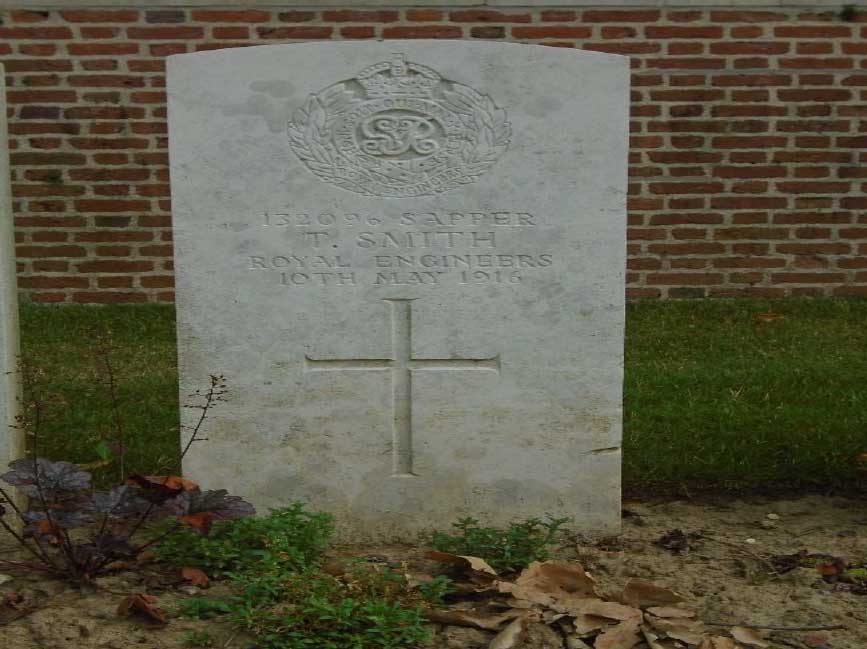
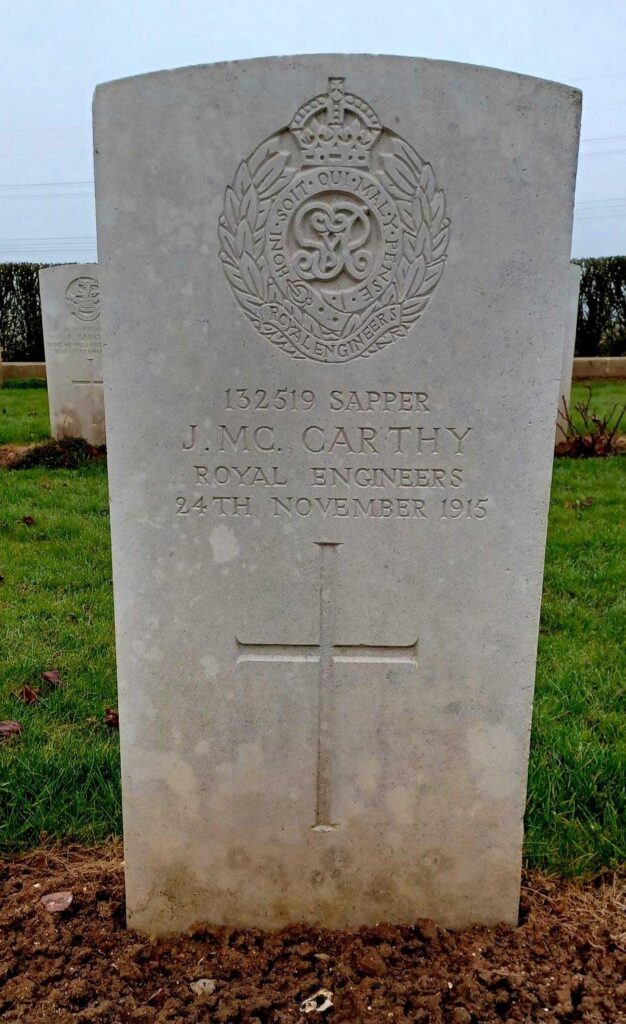
Colincamps. Grave 1.AA.21
On the same day 132096, Sapper, Thomas Smith, was reported as being killed by shellfire. He was a 28 year old unmarried man who lived and worked as a coal miner at Stirling, Scotland. He enlisted on 21 September 1915 and was sent to France on 9 October after the briefest of military training, being graded as a Tunneller’s Mate. He returned to the UK for an unspecified reason just a week later, most likely due to illness, and was at the Royal Engineers’ Depot at Chatham, Kent, on 16 – 17 January 1916, when he was found absent from duty for 12 hours and 45 minutes. He was apprehended by the Military Police in the ‘Brook’, presumably a local public house! His punishment was confinement to barracks for five days.
He returned to France on 12 March 1916 and was posted to the 252nd Company to spend two months working on their tunnels and mines before his death. He is buried in the Sucrerie Military Cemetery, Colincamps.
At 12:05 a.m. on the morning of 11 May the enemy blew a large charge on the Redan Ridge, but it did not form a crater and was too far away from British positions to cause any significant damage or casualties, however, the galleries were flooded with gas.
On 13 May Sergeant Coull was struck off strength after being commissioned and was posted to the 178th Tunnelling Company. It appears that he was subsequently killed on 3 July 1917 at the age of 42 and is buried at Fins, south-east of Bapaume.
At 11 a.m. on 13 May, some 59 hours after the previous enemy explosion, Second Lieutenant Stuart, Sergeant Brown and Sapper McLoughlin were passing along the upper level of RIII (4.2) ‘when at the entrance… an explosion of gas occurred. All three were knocked down and severely burnt. This place had all been examined since the enemy blow and no trace of gas discovered’. There are no obvious matches on the CWGC database, so it is possible that all three men survived their injuries.
On 16 May it was reported that 13 tunnels were now being worked on and were each more than 200 feet (61 metres) out from the British lines. At midnight the enemy blew a large camouflet between RI (2) and RI (2.1) ‘shaking the front system badly and causing large falls wherever the galleries were not timbered. There were no casualties from the blow. Ten men who were laid out unconscious by gas at post #3 post were brought out and brought round by 2nd Lt Smillie [252 Company’s medical officer] and the Proto men [specially trained and equipped mine rescuers]. The gas was very bad and the mines continued to be flooded. At 10 a.m. an infantry private and Proto man Gallacher of the company tried to come from #3 post to #1 mine but were killed by gas before they could be rescued’.
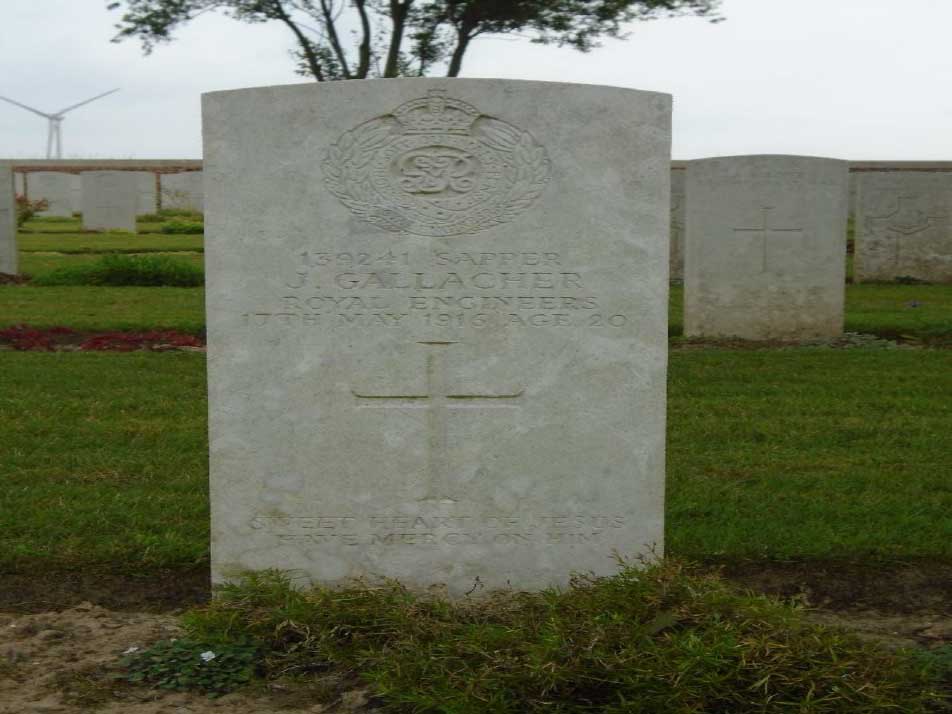
Little is known about 139241, Sapper, John Gallacher, but it appears that he initially arrived in France on 25 March 1915 as a private in the Cameronians (Scottish Rifles), before later transferring to the Royal Engineers. He was 20 years old and as a pension card was raised on behalf of a Rose Ann Gallacher at his parents address in Pollockshaws, Glasgow, it likely that he was unmarried and she was his mother.
On 20 May trouble was reported in tunnel H3 (heading towards the Hawthorn Redoubt) and that it was 900 feet (274 metres) long but ‘work is being carried on silently by wetting the face and working the chalk out with bayonets. The face is now almost entirely flint and progress is very slow’.
At 3 a.m. on 26 May ‘the enemy blew a large charge due east of No. 2 mine [on the Redan Ridge] and at some distance away. There were no casualties but the mines were again badly shaken and filled with gas. The enemy are evidently very frightened to come close. They bombarded our No. 2 and No. 3 mine shafts for four hours’.
On the penultimate day of May it was reported that ‘all the tunnels are now out over 400 feet [122 metres] with the exception of Bess and Delaney and silent work has been commenced on most of them. This month the company has driven 5,327 feet [1,624 metres] of underground working’; a remarkable total considering the number of times the Germans managed to interrupt their work.
William Fairley
As any of you who have researched men who served in the Great War will know it is often easier to find information on those who died rather than those who survived. Therefore, I am most grateful to Stephen Lacoohee for providing information that enables William Fairley’s story to be told. William Beveridge Fairley was a son of Andrew and Elizabeth Fairley and he was born in Dunbar, Scotland, in 1881. Prior to the war, William was working as a quarry contractor and was qualified in the use of Dynamite and Gelatine at the Humbie Quarry, West Lothian, Scotland. He married Mary Thompson Campbell in December 1905 and lived at Hawthorn Cottage, Ratho, Scotland.
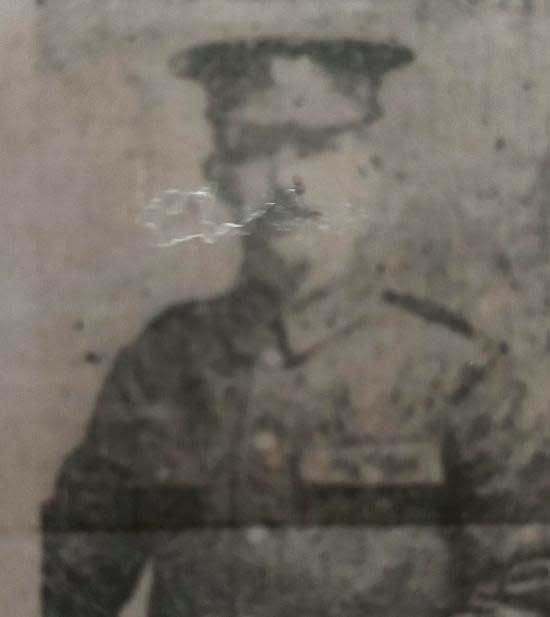
By mid-1915 the couple had three children, the youngest of which was born on 25 May 1915. William enlisted into the Royal Engineers on 18 November 1915 as a Tunnellers Mate with the pay rate of two shillings and two pence a day. He was allocated service number 144914, and after being equipped and given some very basic military training at Chatham, he was posted to the 179th Tunnelling Company, arriving in France on 6 December. On Christmas Eve 1915 he was admitted to the No. 8 General Hospital suffering from haemorrhoids and was subsequently sent back to Britain for an operation.
Once declared fit again he returned to the Base Depot in France on 12 March 1916 and was posted to the 252nd Tunnelling Company a week later, most likely as a replacement for one of their recent casualties. This was at a time when the company were hard at work on both the Redan and Hawthorn Ridges. He was re-mustered to Tunneller on 31 May 1916, and appointed as Lance Corporal on 28 December 1917, and then 2nd Corporal the following day (2nd Corporal was a rank only used in the Royal Engineers and Army Ordnance Corps until 1920 and was denoted by a single stripe like a Lance Corporal, but unlike the latter which was just an appointment, often unpaid, 2nd Corporal was a full NCO rank). William continued to serve for the rest of the war before being demobilised and transferred to the Reserve in early 1919.
Membership Report
Membership for 2026 is maintained at just £10 per annum (as always you can donate more!) and by setting up a standing order you won’t forget in future.
And Finally
Unfortunately, I have been diagnosed with pancreatic and liver cancer and will probably never be able to return to the battlefields; a great blow after doing so dozens of times over the past 45 years. I have visited almost the whole length of the Western Front from the Belgian coast to the Swiss border, as well as visits to the Italian Front and Gallipoli.
As editor I will, however, indulge in giving myself a short obituary before I resign and “fall off the perch”.
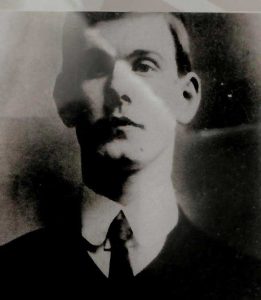
Derek ‘Dickie’ Bird was born in a small village near Brighton, Sussex, in July 1955 and developed an early interest in aviation that led me to join the 225th Apprentice Entry at RAF Halton, Buckinghamshire, in November 1971, aged just 16. Rising through the apprentice ranks I was promoted to Sergeant Craft Apprentice prior to passing out, “not through any merit but to make the parade look pretty with the two flight commanders wearing the same rank”!
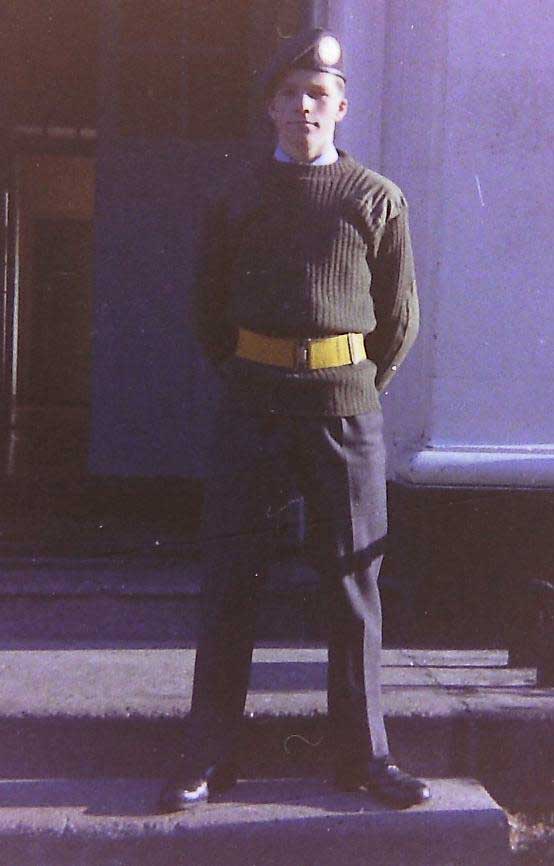
RAF Halton, 1971.
Postings followed to Brize Norton, Oxfordshire; Wattisham, Suffolk and Binbrook, Lincolnshire, before a posting to Germany, from where I made my first trip to Ypres to see the battlefields over the 1981 Easter weekend. Returning to the UK after three years meant a posting to Odiham, Hampshire, before a move up to Lossiemouth, Scotland, in 1985. I then stayed at Lossiemouth until retiring in 2015, apart from six months spent in Belize in 1988.
Along the way I worked on a wide variety of aircraft including the Britannia, Lightning, Puma helicopters, Buccaneer, Hunter and Tornado, as well as working in component repair bays, on major structural repairs and as an Aircraft Battle Damage Repair Instructor, before ending up deskbound in Engineering Operations; the last 12 years as a Full Time Reservist. Along the way I was awarded a Commander-in-Chief RAF Germany Commendation and two Air Officer Commanding Group Commendations.
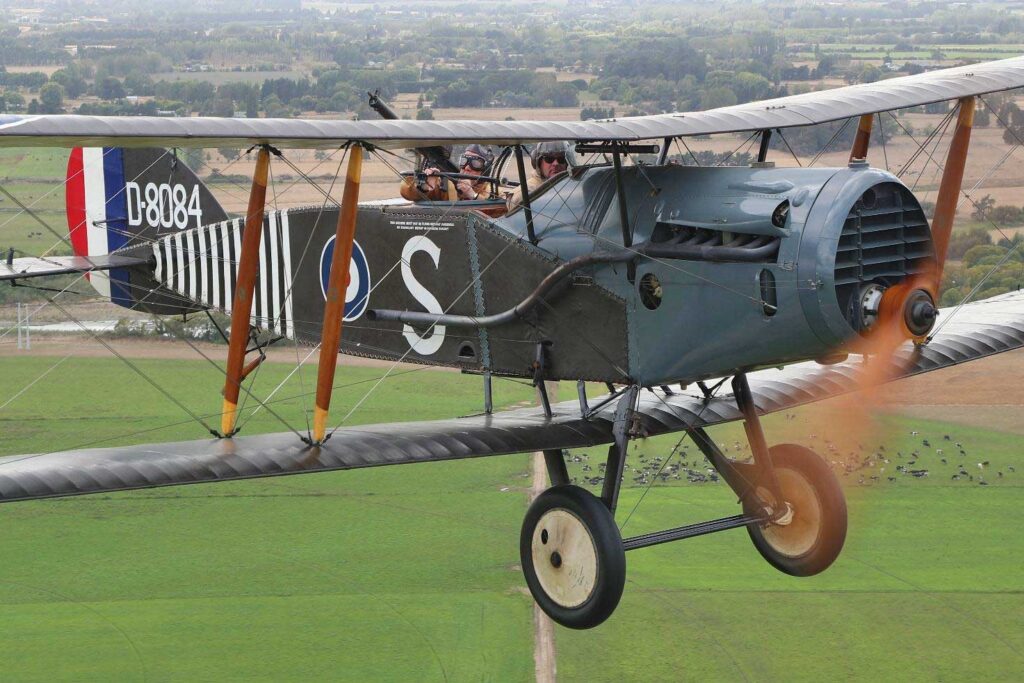
Final retirement came in July 2015 at the age of 60 and, having earned 42 years’ worth of RAF pension, I never worried about seeking further employment! Having developed a such deep interest in the Great War many years before, I continued my research and study of the subject. I had become chairman of the Scotland (North) Branch of the Western Front Association at the end of 1998 and have arranged about 160 public meetings, two branch battlefield tours and commemorative events, at home and abroad, over the following 27 years. In 2006 I was instrumental in the erection of the replacement flagstaff at Beaumont Hamel, after the original erected by the 51st (Highland) Division in 1924 had become semi-derelict, and thereafter organised the annual commemorations on 13 November. In 2008 I completed 10 years of research and self-published The Spirit of the Troops is Excellent, a history of the 6th (Morayshire) Battalion, Seaforth Highlanders, in the Great War. I was a founding member of the Hawthorn Ridge Crater Association, and in 2022 I graduated from the University of Wolverhampton with the MA in Britain and the History of the First Word War. In 2024 I achieved something very special combining my interests in aviation and the Great War when visiting New Zealand and was given the chance to act as the rear gunner in a 1917 Bristol F2B Fighter during an airborne photographic shoot. Previous aviation highlights have included flights in an English Electric Lightning and a Spitfire, and a rather ‘interesting’ flight in a Puma helicopter up a Portuguese forest fire break at below tree-top height!
I have also been helping in the restoration of Avro Lancaster NX611, ‘Just Jane’, at East Kirkby, Lincolnshire, to an airworthy standard but, alas, will now not see her completed or flying. I also did much to reunite members of the 225th Entry and arranged their first reunion in 2011 to mark the 40th anniversary of joining the RAF, and a 50th anniversary of passing out reunion in October 2023. After more than 42 years of marriage I am saddened to soon be leaving a widow and a daughter. It is also very sad to be leaving so many friends around the world, and not get the chance to meet up with fellow enthusiasts on the battlefields again. If by, some unlikely miracle, I fight through this illness, then I’ll be back to the battlefields one day, however, the initial prognosis is far from good, so it is only fair that I resign as at this stage and concentrate on what family life I may have left.
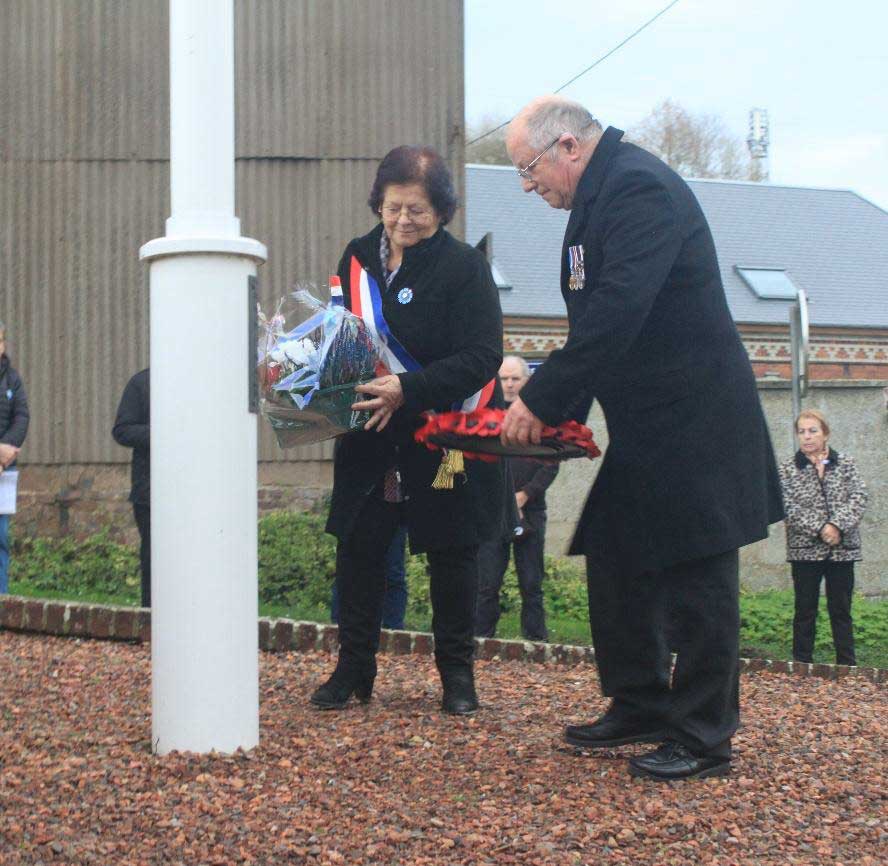
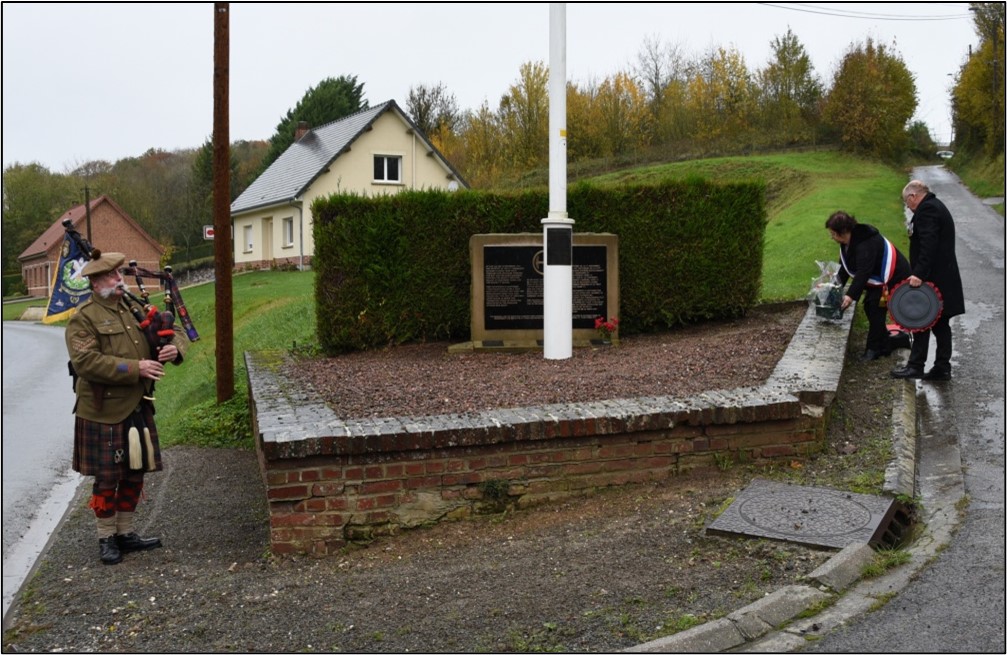
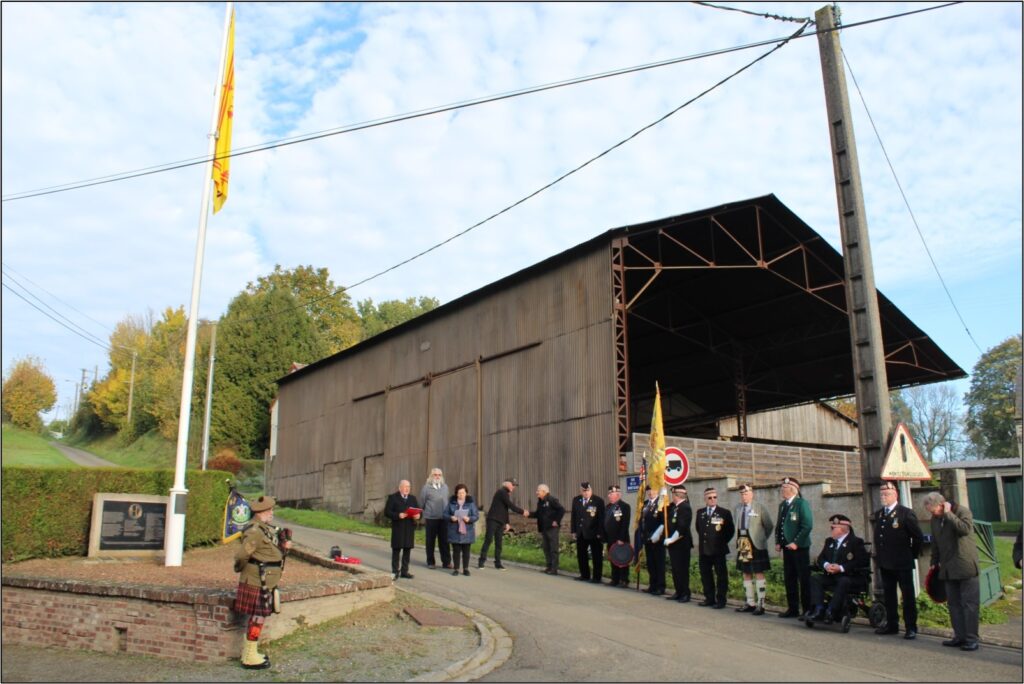
I have arranged for the HRCA, in conjunction with the village, to take care of the 51st (Highland) Division flagstaff and to organise the 13 November commemorations from this point onwards… I will be there in spirit.
Là a´ Bhlàir `s Math Na Càirdean
(Friends are good on the day of battle)
We Will Remember Them.
than this! Photo © Gavin Conroy.
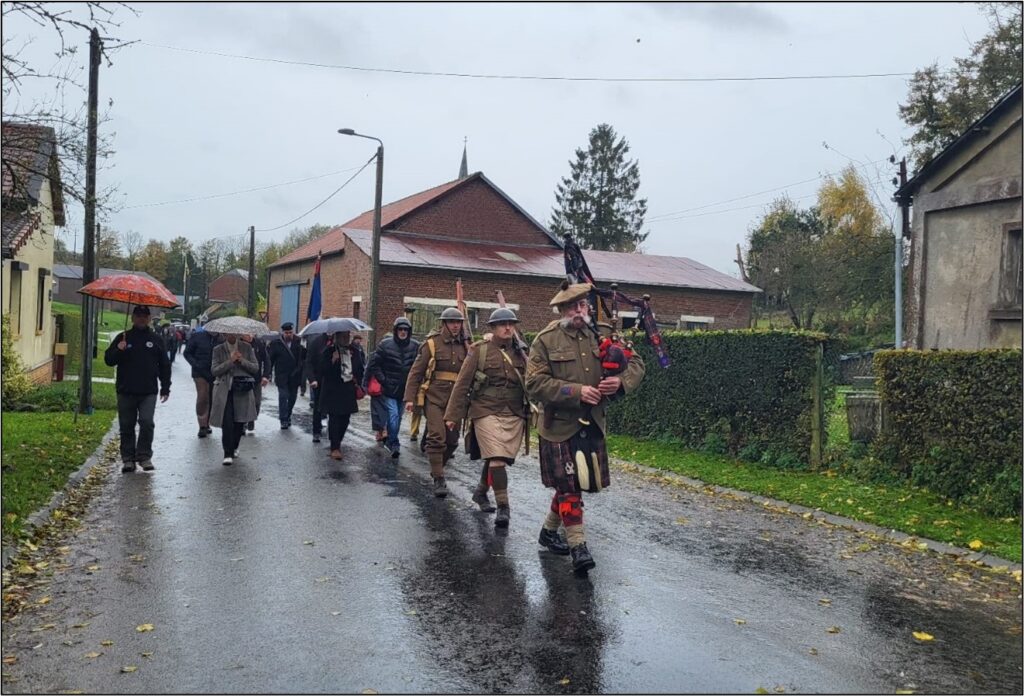
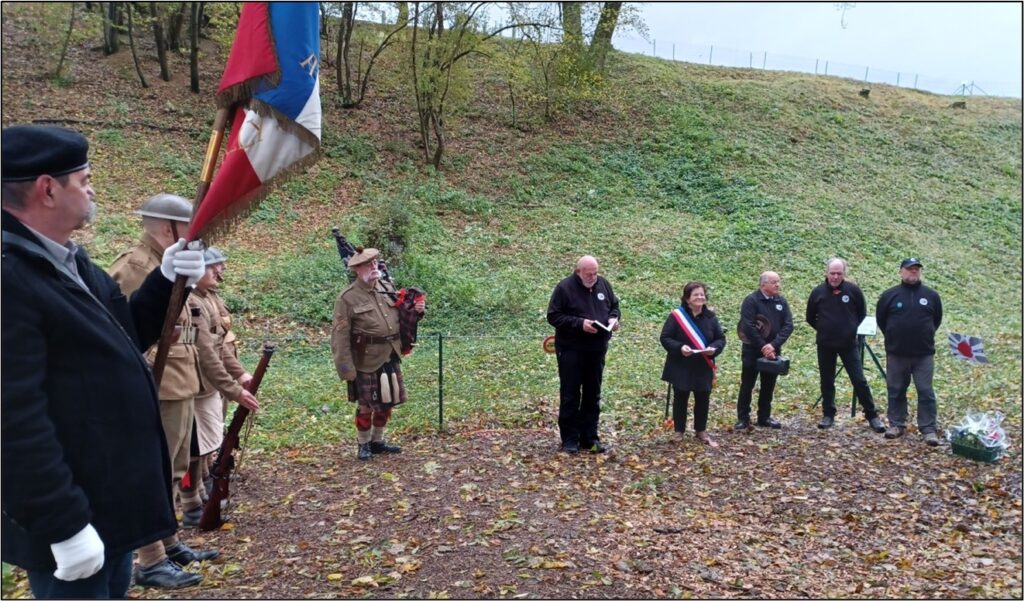
Good bye, and thank you for your support of the HRCA in maintaining this iconic site and commemorating those, of all sides, who fought at Beaumont Hamel; for many it is their final resting place. My thanks also go to the good people of Beaumont Hamel who have, for more than 20 years, supported the efforts of a non French speaking ‘stranger’ who had wild ideas to put up a new flagstaff. Ably guided by the three mayors that I have worked with; the late Monsieur Omiel; Monsieur Magniez and Madame Lavaquerie, many villagers turn out every November, in all weathers, to commemorate the men of the Highland Division – it has been a humbling experience to see them caring about their heritage and history, and also to see them embracing the HRCA since its formation. Others who deserve a special mention are Monsieur Regnard, who interpreted so admirably during the initial negotiations when I was first looking to erect the flagstaff and at many of the subsequent ceremonies, and to Avril Williams at ‘Ocean Villas’ who has supported and helped me in more ways than I could list or ever hope to repay.
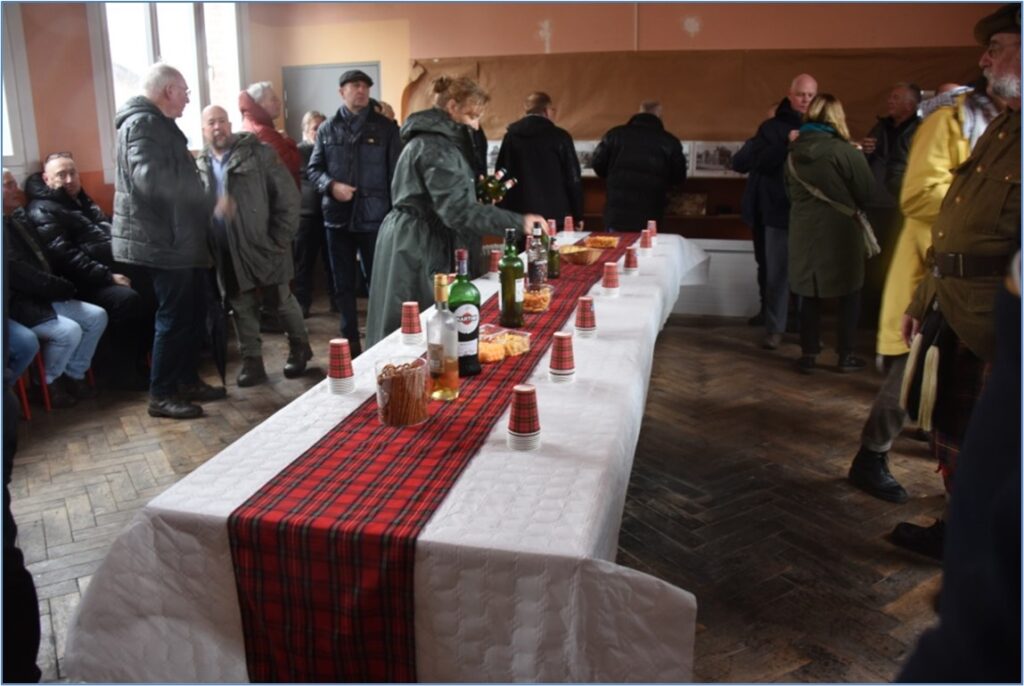
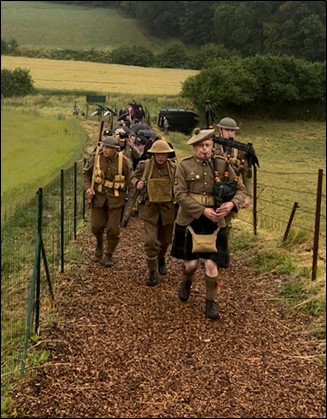
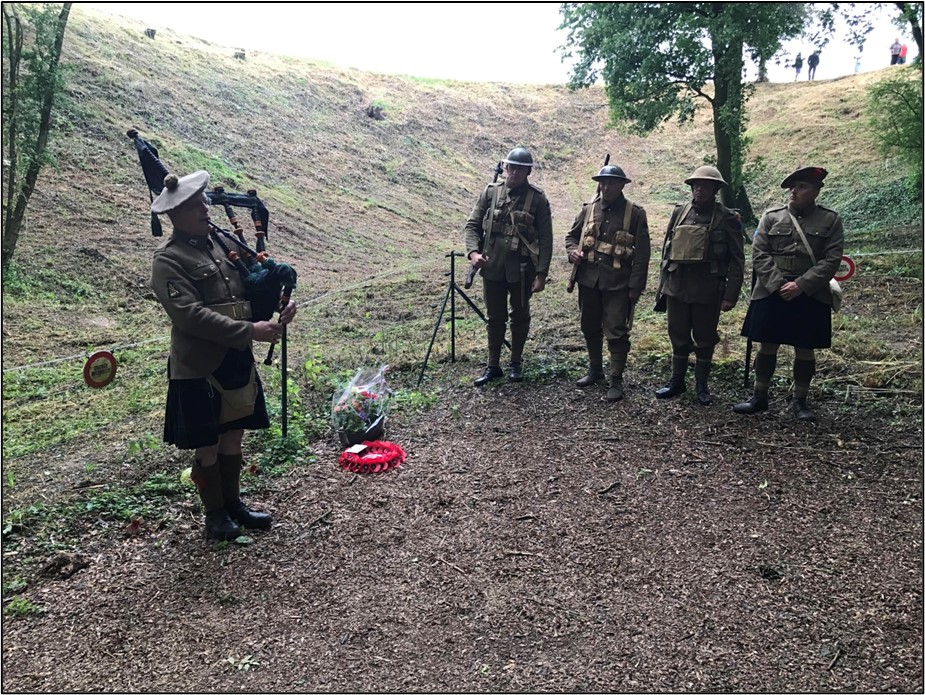
If you haven’t previously done so, I would recommend a visit to Beaumont Hamel, particularly to join Andy Robertshaw’s ceremony at the Sunken Lane on 1 July, before processing up to the Hawthorn Crater for a second ceremony; or at the 51st (Highland) Division flagstaff on the morning of 13 November, again followed by a ceremony at the crater. Refreshments in the Village Hall then follow the ceremonies.
If you would like to take over as newsletter editor please contact the HRCA via the enquiries email address to express your interest.
Newsletter Editor
derek.bird876@gmail.com
HRCA contact details: –
Website: www.hawthornridgeca.com
Email: enquiries@hawthornridgeca.com
Mobile: 07747 862014
Twitter: @HawthornRidgeCA
Facebook: Hawthorn Ridge Crater Association