An occasional newsletter from the Hawthorn Ridge Crater Association (HRCA)
No. 1 – December 2022
Introduction
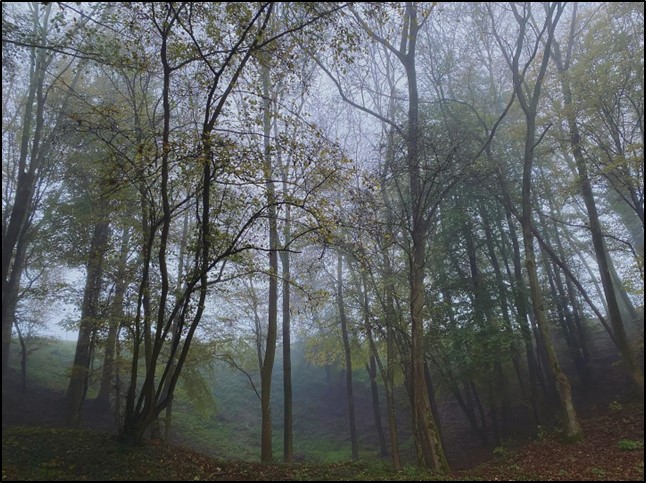
What could be a better start to the newsletter than an evocative picture taken by Dane Wright at the bottom of the Hawthorn Crater on 12 November 2022, when the whole of the Somme was shrouded in thick fog?
As I am sure you are fully aware the HRCA, like so many other organisations, has had to face the many problems posed by the Covid pandemic. However, we now hope that that unfortunate episode is behind us and we can now resume developing the association to ensure that this iconic site is cared for and protected in the future.
As part of that development I have taken on the new role of newsletter editor and hope to send out editions every few months. I will, however, be very much dependent on obtaining information, stories and photographs from many different sources, including of course your good selves. So, just a few lines in, here is my first plea! If you have any information on any aspect of the fighting at the craters or the surrounding area, or on the men who were there, I would very much like to hear from you with a view to spreading the stories to the wider membership.
2022 Annual General Meeting
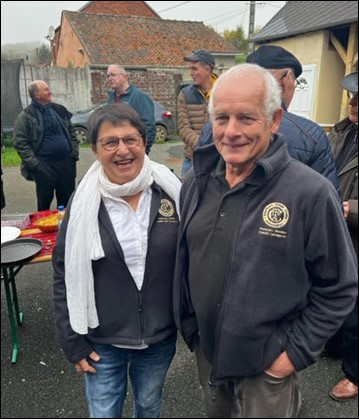
The AGM of the HRCA was held at the Mairie in Beaumont Hamel on the evening of 11 November 2022, where the past year’s activities were reviewed and plans for 2023 set out. Much effort has been expended in ensuring that the fencing and paths have been maintained, with repairs being carried out where necessary and, while members of the committee have been on site on occasion, the real praise must go to Francis Lavaquerie, our man on the spot. Throughout the existence of the HRCA Francis has worked tirelessly and during the epidemic, when none of us were able to assist, he continued to keep the site in extremely good order. Francis is ably supported by his wife, Marie-Jose, who also acts as the secretary of the French side of the HRCA. This has been an excellent example of how the HRCA, as a Franco-British association, is well placed to overcome difficulties as they arise.
Now that said fences and paths (and two new information boards at the entrance) are in place, 2023 will hopefully only see the need for routine maintenance and minor repairs.
Honorary Life Memberships
At the AGM it was decided to honour Francis and Marie-Jose Lavaquerie with Honorary Life Membership of the HRCA. As previously mentioned, their work to ensure the future of the craters, particularly through the pandemic period, merits the highest praise and this is a fitting recognition of their efforts.
13 November Ceremonies
For the past 16 years I have organised a ceremony at the 51st (Highland) Division flagstaff in the centre of Beaumont Hamel on the anniversary of the capture of the village. The original flagstaff was unveiled in 1924, but over the years was reduced to a four-foot high stump, although it did retain the original bronze plaque. I decided that the flagstaff should be re-instated and raised the funds to buy a replacement, along with a new memorial stone and flags. The new flagstaff was erected in the autumn of 2006 and an unveiling ceremony was held on 13 November 2006, the 90th anniversary of the Highlanders’ capture of the village.
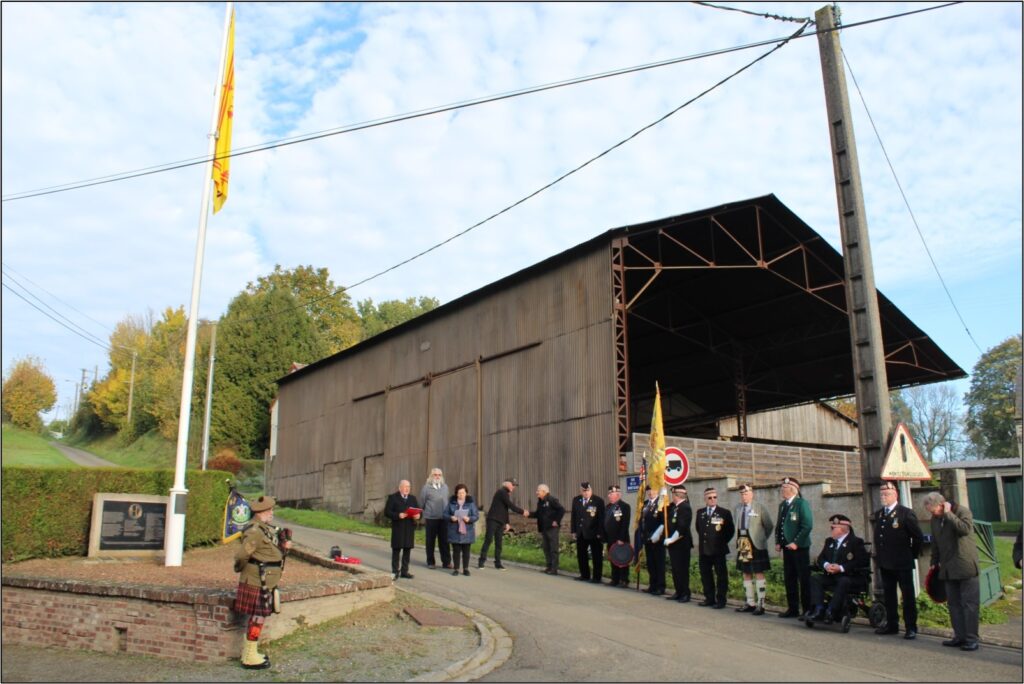
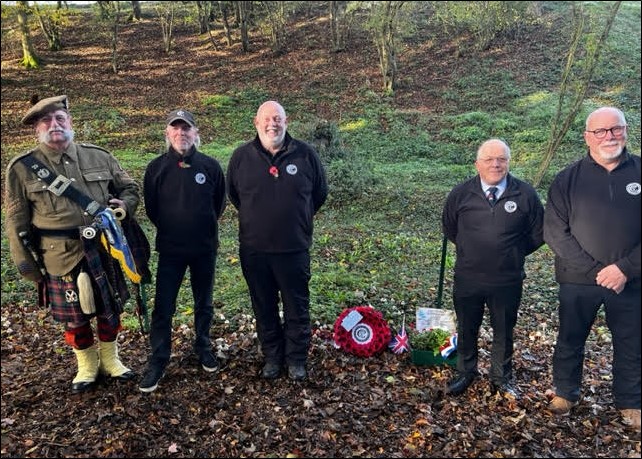
Since the formation of the HRCA I am delighted that many of the committee have been attending the flagstaff ceremony, and the event has subsequently expanded as most of those present then proceed up to the Hawthorn Crater for another short ceremony, followed by return to the village for a vin d’honneur in the village hall. This seems to be a good format and we would be delighted to see you next year at the flagstaff in the centre of Beaumont Hamel at 10:30 a.m. on 13 November.
Archaeology Report
Dane Wright, our lead archaeologist, has kindly provided an overview of research at the craters: –
The HRCA’s initial intentions for the site was to bring the craters to the forefront of all battlefield walks and tours, to tell the whole story of the events which took place, not just in the summer of 1916, but also to understand the site’s strategic and tactical importance. The archaeological work which was first carried out in 2018 had a primary aim of non-intrusive works, which includes a photographic archive of the site pre-works, a detailed sketch plan of all visible features and 3D laser scans and multi-spectral drone imagery. This would then form the basis on which specific academic questions would be created.
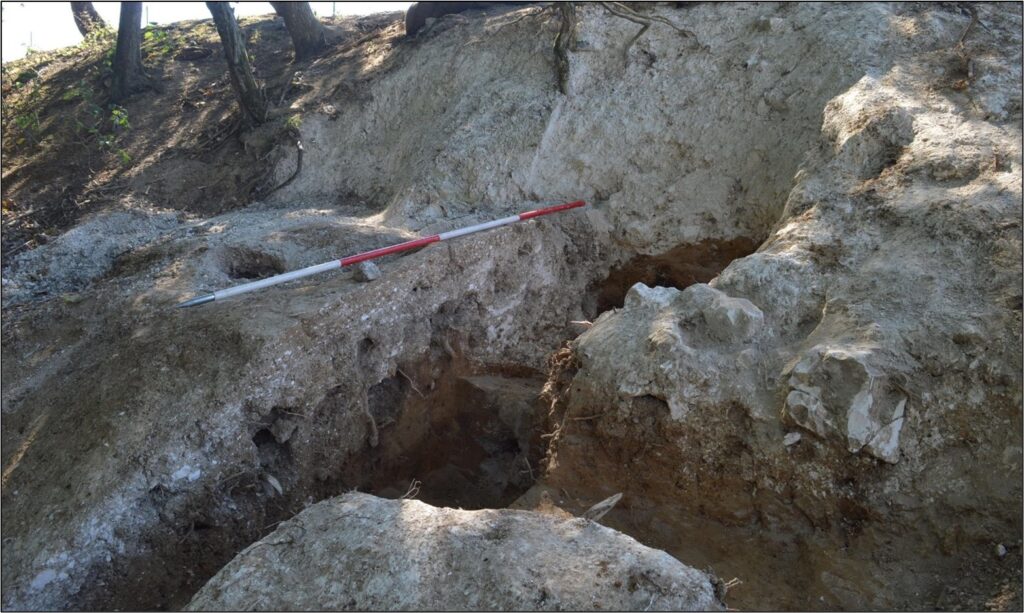
A walk over survey gave some fantastic early results, including possible defensive works established within the upcast material created by the first ‘overcharged’ mine of 1 July 1916. Unfortunately, these features were also showing signs of severe damage through burrowing animals and large tree roots. It was decided that the next phase of works was to look at the southernmost identified position as this was already exposed to the elements, the base of which also had a vast network of animal burrows. This seemed the best place to gain information without altering the craters, what would be termed rescue archaeology.
Small archaeological excavations were carried out in the summer and winter of 2018, in which the position was properly identified, and found to consist of a small rectangular scoop in slight semi-circle reminiscent of a fire bay in a crenellated trench system. The base of this ‘fire bay’ was heavily damaged by animal burrows, however, there was evidence of a possible shallow trench base. Within the backfill of this were remnants of communication wire, barbed wire and angle iron revetment. A single spent German bullet casing was recovered, which was attributed to the fighting of 1918. The archaeology is very difficult to fully understand in small almost ‘keyhole surgery’ like areas; it is also quite unique excavating such shattered ground.
Further work is needed, unfortunately Covid managed to slow the momentum. Plans are in place to carry out a small excavation within a position identified around the north-western lip of the northern crater in the near future. We have a multi-national team of very experienced archaeologists at the ready, and aim to run an outreach element alongside the excavations as they are being carried out. This will allow visitors to ask the archaeologists questions, and items will be displayed as they are found to give an extra dimension to their visit.

252nd Tunnelling Company, Royal Engineers
The earliest entry in the War Diary for the 252nd Tunnelling Company was on 21 October 1915. The company was forming at Rouen and Captain Reginald (Rex) Trower, RE, was the first commanding officer. Over the following days they moved forward and by 1 November had arrived at the sector assigned to them. Their area of responsibility ran from facing Serre in the north to south of Beaumont Hamel, and encompassed both the Redan and Hawthorn Ridges. Initially their effort was focussed on the Redan Ridge, where they dug shafts down as deep at 150 feet (46 Metres), along with multiple galleries for the systems known as RI, RII, RIII and RIV.
The first mention of mining on Hawthorn Ridge does not come until 15 March 1916, when worked was started on HI and HII. H3, which was the tunnel to eventually reach the Hawthorn Redoubt, was first mentioned on 11 April with the comment ‘H3 face was driven 35 feet [11 Metres] through solid chalk’, indicating that work must have already been progressing for some time.
I hope that in later editions I can explore some of 252 Company’s remarkable mining exploits, their battles against enemy counter-mining, and of course the stories of the men who were there. If you have information on any aspect of the tunnelling or the tunnellers, or indeed any aspect of the fighting around Beaumont Hamel, please contact me.
Membership Report
While the pandemic was preventing visitors from the UK travelling to France, the decision was taken to not press for any membership fees over that period, however, with the lifting of travel restrictions and full resumption of HRCA activities, Rick Smith is now looking to gather in membership fees for 2023. These are maintained at just £10 per annum.
For information on membership, please contact Rick at rick@hawthornridgeca.com
New Information Leaflets
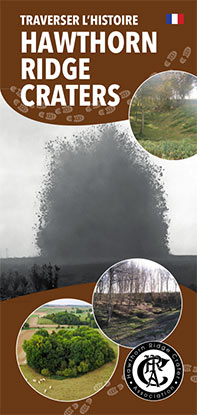
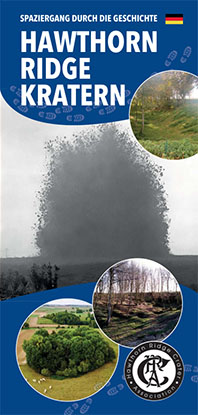
Rick Smith has produced some excellent new leaflets that help to explain the site to visitors. There are currently English and French versions, and work is underway to get a German version as well. Copies have been distributed to suitable locations on the Somme and they will hopefully help to draw in more visitors. They will also be added to the website at the next update.

And Finally
I hope that now all travel restrictions have been lifted you will (if you haven’t done so already) visit the Hawthorn Crater to see what has been achieved in recent times. I hope that you will be impressed and will report back to me your thoughts, and possibly send me a photograph or two of your visit.
Newsletter Editor
derek.bird876@gmail.com
HRCA contact details: –
Website: www.hawthornridgeca.com
Email: enquiries@hawthornridgeca.com
Mobile: 07747 862014
Twitter: @HawthornRidgeCA